Category: Copywriting

  • Five ways to beat copywriter’s block

    Writer’s block can strike even the most prolific of us. Whether you’re writing a novel, an email, or a blog post, it can stop you in your tracks. What will you get those creative juices flowing again? I’ll let you into some of my tips and tricks — although some might strike you as a bit odd.
    Tips for when copywriter’s block strikes.

    This is my number one tip. Leave your screen and take a walk. Not only is walking ten minutes a day good for you, but research at Stanford University has found it boosts creativity by 60%. Some of the most famous writers who have ever lived love to walk. Charles Dickens is believed to have walked 12 miles each day. And it’s reported William Wordsworth clocked up 175,000 miles in his lifetime.

    Fresh air, exercise and a change of scenery always helps me to think more clearly. But inspiration can strike at the strangest places. So, when that killer phrase pops into your head make sure you can have something on you to record it before it vanishes forever. It could be a notebook or your phone.

    There have been times on my walk when I’ve had a brainwave. Because I don’t want to forget it, I’ve recorded a voice memo on my phone, despite some funny looks. So, make sure you have a notebook or your phone with you when you have your flash of inspiration.

    2. Get some exercise.

    What if it’s raining outside? I find a short burst of exercise can provide the same results as going for a walk. YouTube has lots of seven and 10-minute workouts which won’t get you too sweaty. I also enjoy a quick game of Just Dance or boogieing to a track on Spotify — when nobody’s watching of course.

    3. Pick up a book.

    Any escape from your screen will help cure writer’s block. I like to take 20 minutes away from my screen with my latest book. Watching television is also an escape away from your screen, but reading can make you a better writer. Reading other people’s words can be inspirational and stimulating. Just Publishing Advice has some useful tips on you can use reading to improve writing.

    4. Brainstorm.

    Sometimes I need to be productive even though the words aren’t flowing anymore. I have my screen break but take my notebook and pen with me. Writing on paper instead of on the screen helps me when writer’s block has struck. I can brainstorm sitting on my sofa, and when I return to my screen, I’ll turn those ideas into sentences.

    5. Try some writing exercises.

    When you have writer’s block the idea that you could just sit down and write might not make much sense. But as I have been writing this post, I’ve discovered there are writing exercises which inspire creativity. I’m looking forward to trying these from Victoria Fraser.

    And Copyblogger’s Writer’s Warm Up ideas are also a great way to kick off a productive day, hopefully without writer’s block getting in your way.

    Inspiration can strike at the most unusual times. For me it’s often when I’m having a shower, doing the washing up, or when I’m about to fall asleep. These tips have one thing in common — when writer’s block hits, spend some time away from your screen.

    What are your tips for curing writer’s block? Let me know by commenting below.

    For more writing tips follow me on LinkedIn.
  • Why you need copywriting that enhances your brand image

    There’s a new barber shop in town. I walked past the other day wondering if I should take my boys. It looked very trendy. But outside the door two men having a loud argument. I decided we’d stick with our usual barber’s.

    Image is important when you are trying to win new customers. The shop front of the barber shop was stylish and eye-catching. But the argument outside gave me a bad impression and I was no longer tempted to go in. And you might have a professional, fully functioning website, but the copywriting could be losing you potential sales. Your copywriting needs to engage your reader to work. Here are some of the steps you can take to achieve that.

    1. Ensure your copywriting is error free.

    Are you confident with grammar, punctuation, and spelling? Have you proofread your copy before publishing it? These mistakes can make you look like you are careless or sloppy, or that you can’t spell. And this could undermine your reader’s confidence in your business. Accurate and proofread copywriting will show you are competent and will move your reader a step closer to taking your call to action.

    • Write to capture your reader’s attention?

    Research by the Nielsen Norman Group has found 79% of people scan a website instead of reading it. Your copy needs to be structured to hold your reader’s attention.

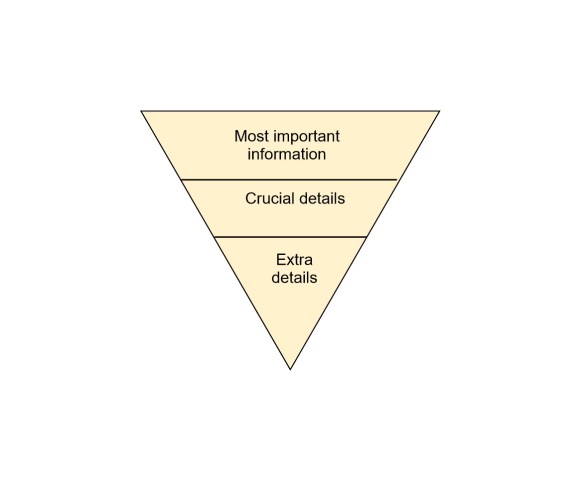
    Take a tip from journalists. They write news articles using a technique called the ‘the inverted pyramid.’ This means writing the most important facts first. This grabs the reader’s attention and encourages them to read on.

    Capture your reader’s attention with the inverted pyramid.
    • Write in Plain English.

    Is your copywriting readable? Copy with long words, lengthy sentences, and even longer paragraphs will put off your reader. Readers like text that is easy to read and to achieve this you should write in plain English. There are many apps which will check the readability of your copy. One way is by using the Readability Statistics on Word. Look out for the Flesch-Kincaid Reading Score. For plain English this should be between 60 and 70.

    Here are some other tips for copywriting that will engage:

    • Use eye-catching headings.
    • Divide your text with sub-headings.
    • Break up text with numbered or bullet lists.
    • Use short paragraphs.
    • Write sentences which are less than 20 words long.
    • Write for your ideal customer.

    Another way to engage your reader is to write specifically for them. Create a profile, or buyer persona, of your target client or customer. It should include:

    • Demographic details including gender or gender identity, age, job, income, family.
    • What they read.
    • Their preferred social media platform.
    • Favourite film of book.
    • Their goals.
    • Their challenges.

    When you have defined your customer or client, you’ll be able to write copy that will resonate with them.

  • My journey from journalist to copywriter.

    I decided to become a Freelance Copywriter after an advert caught my eye. It was to write for a training provider. After several years working as the education specialist on a local newspaper, I thought it would be ideal. But the company wasn’t looking for a journalist, it wanted a copywriter. And my application bombed.

    The idea of working freelance and being my own boss stayed with me though. And copywriting interested me.

    Journalism had attracted me because, with thorough research and powerful writing, an article can be a force for change. Effective copywriter can also be powerful. Persuasive web copy can help a start-up to build a successful business. A college prospectus can entice a student to sign up for a course that can change their life. And with powerful copy, a charity can attract new volunteers and donations.

    I was excited about how I could use my writing skills to help businesses and charities to achieve their goals. But to add copywriting to my writing skillset there were a few steps that would help me out. And in this post, I’m sharing the path I’ve taken so far.

    Become a certified copywriter.

    Signing up for a course has given me confidence in my abilities as a copywriter. After researching online courses, I chose the College of Media and Publishing’s Copywriting course. The course gives you the chance to learn and practice different types of copywriting, ranging from Direct Mail to Social Media posts. The content and tutor support are excellent. I already knew about readability and press release creation. But I know much more now. And after spending hours poring over the details of the ASA’s Code of Practice, it’s engraved in my brain.

    Read lots of helpful books.

    Reading helps your writing to improve. And I love reading, both fiction and non-fiction. I have also developed an addiction to books written by top copywriters. These books have taught me a lot about the process of copywriting and selling.

    My recommendations to date are:

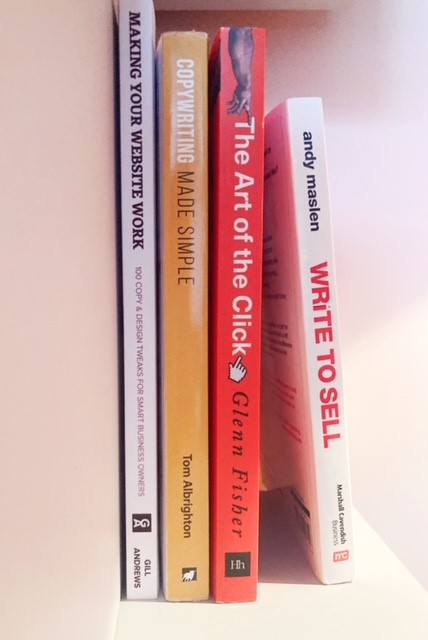
    • ‘Write to Sell’ by Andy Maslen
    • ‘Copywriting Made Simple’ by Tom Albrighton
    • ‘How to Write Seductive Web Copy’ by Henneke Duistermann.
    • Making your website work by Gill Andrews.

    And on my ‘to be read’ pile is ‘The Art of the Click’ by Glenn Fisher.

    Books I recommend for learning about copywriting.

    Join a professional organisation.

    One of the first things I did when I decided to go freelance was join ProCopywriters. It provides opportunities for copywriters to:

    • Learn and develop through webinars, blogs posts and conferences.
    • Gives them the opportunity to showcase their work.
    • Helps members find work.
    • Post their profile on a database of writers.

    Learn from other copywriters.

    There are many copywriters to learn from. I’m grateful to learn from copywriters who:

    • Run successful mentoring programmes.
    • Host helpful Facebook groups.
    • Email out handy and entertaining newsletters.
    • Write thought-provoking blog posts and social media content.

    The steps I have taken to date have helped shape me to be the writer I am today. But you can never stop learning, which means this journey has not ended, and my development will go on.

    Do journalism and copywriting have anything in common?

    Journalists and copywriters use the written word for different purposes. I’m proud to be both a journalist and a copywriter. And it means I can offer my clients a broad range of writing services. Can the qualities of a journalist complement that of a copywriter? Watch out for a future blog post when I’ll discuss that.

    This journey has reinforced how much I love research and writing. Whether it’s an article, a piece of sales copy, or this blog post. And I’m lucky to be able to offer my services doing what I love. To find out how my writing can help your organisation drop me an email at joanna@joannawoodhouse.co.uk.